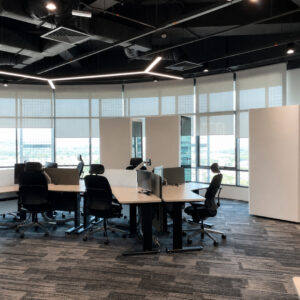


Open-plan workplaces make collaboration easy. Privacy is harder.
A phone call, video meeting or focused task can quickly become difficult when conversations, movement and everyday office activity compete for attention. Building more permanent rooms is one solution, but it can also reduce flexibility and require additional construction.
Office pods offer another approach.
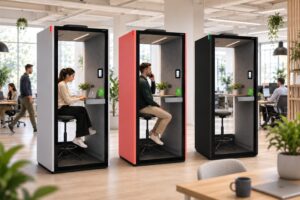
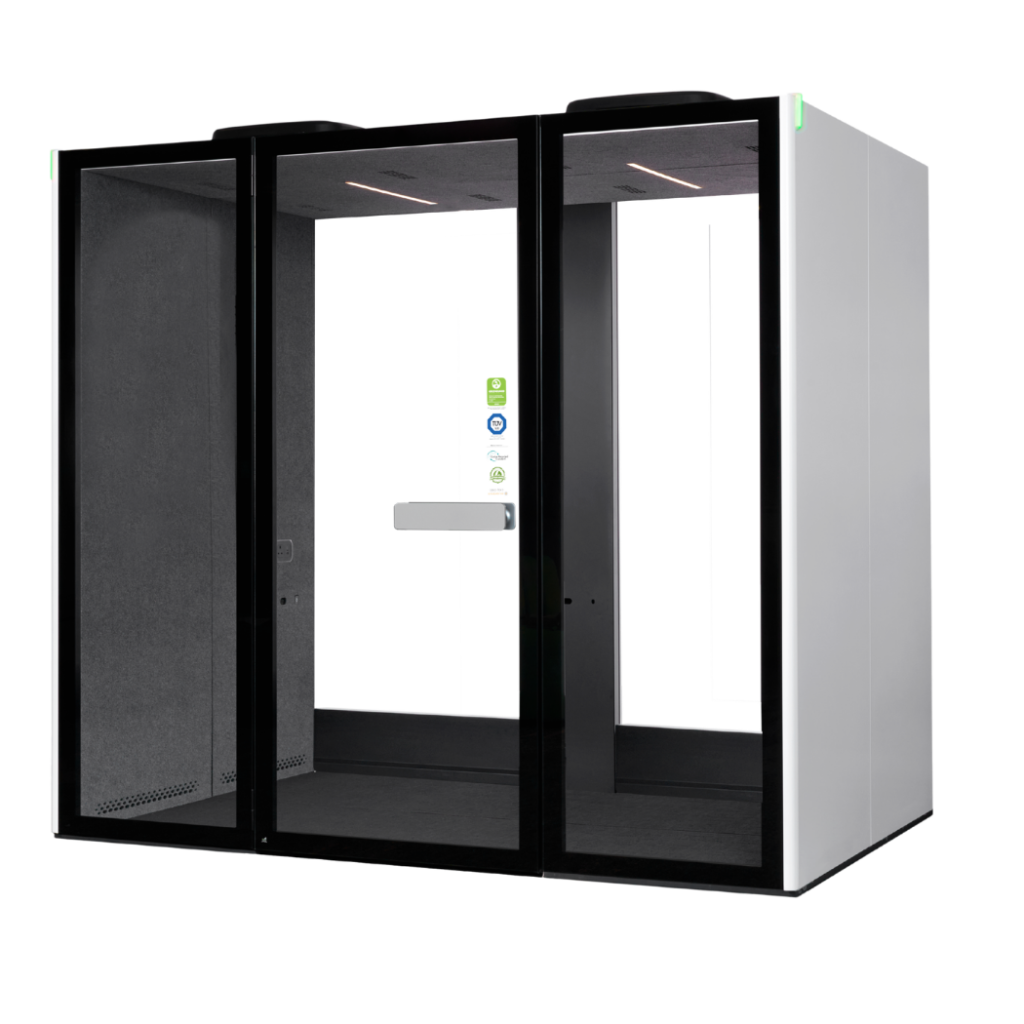
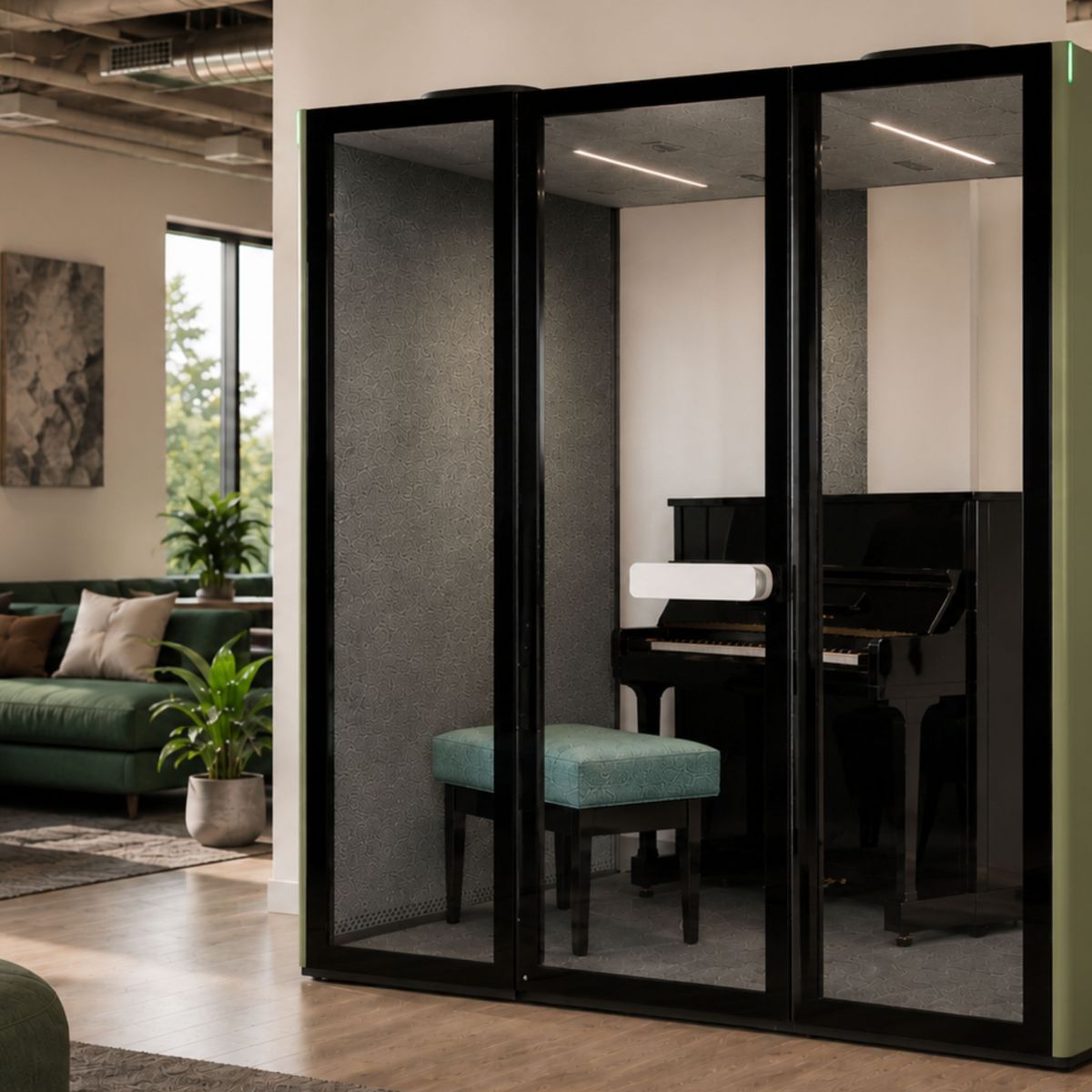
An office pod is an enclosed workspace designed to create a more private environment for calls, focused work, meetings or collaboration within a larger workplace. Depending on the model, an office pod may accommodate one person or an entire small team while integrating acoustic treatment, ventilation, lighting, power and workplace technology.
But office pods vary significantly in size, acoustic performance, comfort, construction and features.
This guide explains what to consider before choosing one.
What Is an Office Pod?
An office pod is a freestanding or modular enclosed workspace installed within an existing office or commercial environment.
Unlike a conventional meeting room, a pod can provide enclosed space without becoming a permanent part of the building.
Office pods can be designed for different activities, including:
- private phone calls;
- video conferences;
- individual focused work;
- confidential conversations;
- interviews;
- two-person discussions;
- small meetings;
- brainstorming; and
- team collaboration.
Modern acoustic office pods can also integrate ventilation, lighting, power, charging and controls into the structure.
This means the pod becomes a functional room within a room rather than simply an acoustic enclosure.
Why Are Companies Adding Office Pods?
The modern office has to support very different activities at the same time.
One employee may be on a video call while another needs concentration. A nearby team may be discussing a project while someone else needs privacy for a confidential conversation.
Trying to accommodate all of these activities in one open environment creates competing requirements.
Office pods create dedicated spaces for specific activities without requiring every activity to have its own permanently constructed room.
Privacy
Enclosed acoustic pods help reduce the transmission of speech between the person inside the pod and the surrounding workplace.
This is particularly useful for calls, virtual meetings and conversations where greater speech privacy is required.
Focus
A pod creates separation from surrounding conversations and movement.
Instead of expecting the entire office to remain quiet, employees have somewhere to go when a task requires greater concentration.
Collaboration
Larger meeting pods create enclosed spaces where teams can talk without adding as much conversational noise to the surrounding office.
Flexibility
Traditional meeting rooms become part of the building.
Modular office pods can provide an alternative that may be installed and, depending on the product and site conditions, relocated as workplace requirements change.
That distinction becomes increasingly important when organizations expect their workplace to evolve.
What Types of Office Pods Are Available?
There is no single office pod that works for every activity.
The best starting point is therefore not:
“Which pod looks best?”
It is:
“What will people actually do inside it?”
1. Office Phone Booths
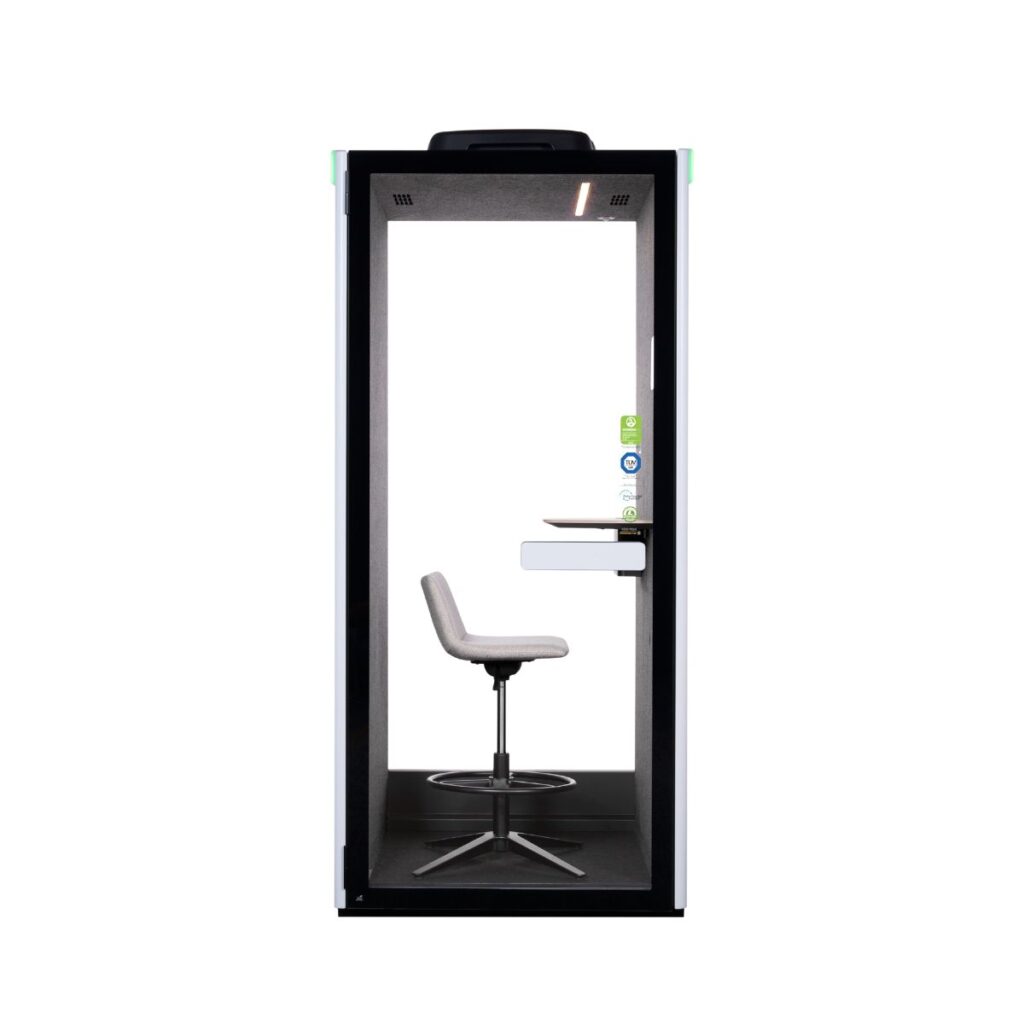
An office phone booth is generally the smallest type of acoustic pod.
It is designed primarily for one person making:
- phone calls;
- short video calls;
- private conversations; or
- brief focused tasks.
Phone booths work particularly well in open offices where employees frequently need somewhere to take calls without occupying a meeting room.
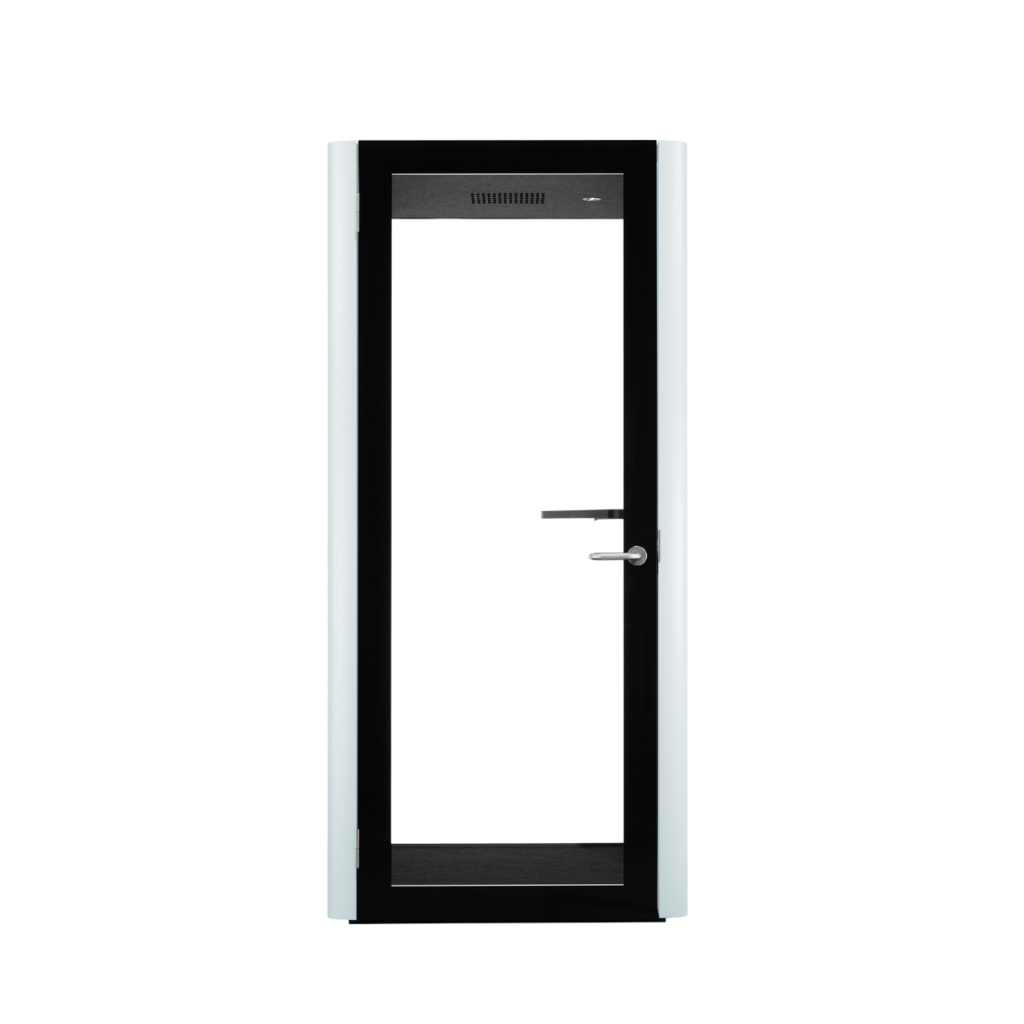
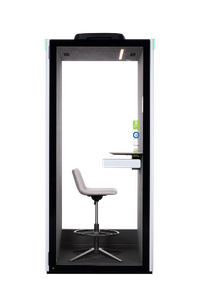
Winpod’s S Pod 3.0 Plus is an example of this category. It is a single-person office pod designed for private calls, video conferences and other activities requiring greater privacy.
2. Personal Office Pods
A personal office pod gives one user more working space than a typical phone booth.
This can be useful for people who need to spend longer periods inside the pod or require more desk space.
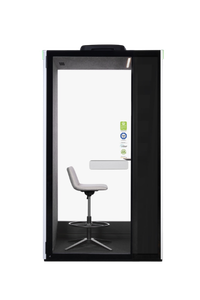
Winpod’s P Pod 3.0 Plus is designed as a spacious single-person acoustic workspace for calls, video meetings and focused work.
3. Working Pods
Some individual pods are designed specifically around longer focused-work sessions.
These may include larger work surfaces, seating, storage or ergonomic features that make the space more suitable for sustained work.
For example, Winpod’s W Pod 3.0 Plus combines an extendable desktop and integrated storage within a single-person acoustic workspace.
4. Discussion Pods
Not every conversation requires a four- or six-person meeting room.
Smaller discussion pods can create space for interviews, one-to-one conversations and small-group discussions.
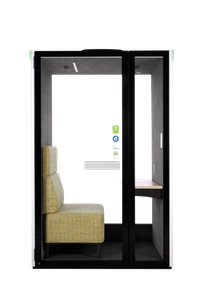
Winpod’s D Pod 3.0 Plus is designed for approximately two to four people.
5. Meeting and Collaboration Pods
Larger office pods function more like enclosed meeting spaces.
They can support:
- project meetings;
- brainstorming;
- presentations;
- interviews;
- video conferences; and
- team discussions.
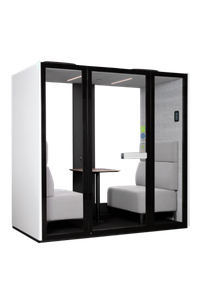
Winpod’s current Pod 3.0 Plus range extends through four-person, five-person and seven-person configurations, allowing organizations to match the enclosed space more closely to the number of people who actually use it.
What Size Office Pod Do You Need?
Bigger is not automatically better.
A large meeting pod used primarily by one person consumes more floor area than necessary. A phone booth used for long working sessions may feel restrictive.
Instead, consider activity + occupancy + duration.
| Typical Activity | Suggested Pod Type |
|---|---|
| Quick private call | Single-person phone booth |
| Video call | Single-person phone or personal pod |
| Focused individual work | Working pod |
| Interview / one-to-one | Small discussion pod |
| 2–4 person discussion | Discussion or small meeting pod |
| Four-person meeting | Four-person meeting pod |
| 5-person collaboration | Collaboration pod |
| Larger team discussion | Large meeting pod |
Also consider how frequently the space will be occupied.
An organization with 100 employees does not necessarily need pods for 100 people. Workplace planners should consider meeting-room demand, call frequency, hybrid attendance patterns and existing quiet spaces before deciding on the number and mix of pods.
Are Office Pods Really Soundproof?
“Soundproof” is frequently used to describe acoustic pods, but absolute sound isolation is not a realistic way to evaluate most workplace products.
A more useful question is:
How effectively does the pod reduce speech travelling between the inside and outside?
For office pods, one relevant testing standard is ISO 23351-1, which evaluates speech-level reduction for enclosures such as acoustic booths and pods.
This matters because buyers should be able to compare measurable acoustic performance rather than relying only on descriptions such as:
- quiet;
- private;
- acoustic;
- sound-insulated; or
- soundproof.
For example, Winpod publishes speech-level reduction results according to ISO 23351-1 for several Pod 3.0 Plus models.
The S Pod 3.0 Plus has a published speech-level reduction of 30.1 dB, while the P Pod, W Pod, C Pod and M Pod publish results of 28.9 dB.
When comparing office pods, ask the supplier:
Which acoustic standard was used?
Was the complete pod tested?
What result did it achieve?
The answers are more useful than a generic claim that a pod is “soundproof.”
What Should You Look for When Buying an Office Pod?
Acoustics are important, but they are only one part of a good workspace.
Acoustic Performance
Look for performance backed by a recognized testing method.
If two manufacturers describe their products as highly acoustic but use different testing methodologies, the marketing language alone tells you very little.
Ventilation
An enclosed workspace needs adequate airflow.
This becomes especially important when several people occupy a meeting pod or when one person works inside a pod for an extended period.
Ask how the ventilation system operates and whether users can control it.
Indoor Air Quality
Look beyond airflow to the materials inside the pod.
Furniture, adhesives, finishes and other interior materials can contribute to chemical emissions.
Independent low-emission certifications can therefore provide additional information when evaluating products for indoor environments.
Winpod products feature GREENGUARD Gold certification for low chemical emissions.
Lighting
A pod should provide sufficient lighting for its intended activity.
Also consider how the light is controlled.
Occupancy or motion-based controls can make the pod easier to use while preventing lights from remaining on unnecessarily.
Power and Connectivity
People enter office pods carrying laptops, phones and other devices.
Depending on your workplace, useful connections may include:
- AC power;
- USB-A;
- USB-C;
- fast charging; and
- network connectivity.
Comfort
A pod can perform well acoustically and still be unpleasant to use.
Evaluate:
- seating;
- desk height;
- working surface;
- legroom;
- temperature;
- ventilation;
- lighting; and
- the expected duration of use.
A booth intended for a ten-minute call has different ergonomic requirements from a pod designed for several hours of focused work.
Materials and Construction
Consider what the pod is actually made from.
Commercial office furniture experiences repeated daily use, so doors, hinges, surfaces, glass, frames and interior finishes all matter.
Construction quality also affects how well the product performs after years of opening, closing, moving and everyday use.
Sustainability
Sustainability claims should be specific enough to evaluate.
Look for information about:
- material composition;
- recyclability;
- product lifespan;
- repairability;
- modularity;
- environmental certification; and
- ability to relocate or reconfigure the product.
Winpod publishes independently validated recyclability figures under UL ECVP 2789 for multiple Pod 3.0 Plus models.
Installation and Relocation
Ask what installation requires before purchasing.
Important questions include:
- How is the pod delivered?
- Does it arrive assembled or in components?
- How long does installation typically take?
- What access is required?
- Can the pod be disassembled?
- Can it be relocated?
- What electrical connection does it require?
These details can materially affect the total project.
How Much Does an Office Pod Cost?
There is no meaningful universal price for an office pod.
Prices vary substantially because a single-person phone booth and a multi-person acoustic meeting pod are fundamentally different products.
Cost can be influenced by:
- pod size;
- acoustic engineering;
- materials;
- glass construction;
- ventilation;
- furniture;
- lighting;
- integrated power;
- technology;
- certifications;
- customization;
- freight;
- installation; and
- project location.
For commercial projects, purchase price should therefore not be the only comparison.
Consider total value over the expected life of the pod.
A lower-cost product may initially appear attractive, but buyers should also consider durability, acoustic performance, warranty, replacement components, ability to relocate the pod and expected service life.
The most useful quotation is one based on your required pod configuration and project location.
Office Pod vs Traditional Meeting Room
Office pods and constructed rooms can both be useful. They solve different workplace problems.
| Office Pod | Constructed Meeting Room |
|---|---|
| Modular product | Permanent construction |
| Can potentially be relocated | Fixed to location |
| Defined factory-built specification | Project-specific construction |
| Installation rather than full room construction | Multiple construction trades may be required |
| Useful for changing workplaces | Useful where permanent space is required |
| Available in standardized sizes | Can be custom-sized |
The decision does not have to be either/or.
Many effective workplaces use permanent meeting rooms for larger or specialized meetings and acoustic pods for calls, focused work and smaller discussions.
Where Should Office Pods Be Placed?
Placement has a major impact on whether employees actually use a pod.
A pod should be easy to access without creating new circulation problems.
Potential locations include:
- near open work areas;
- beside collaboration zones;
- near shared workstations;
- between active and quiet areas;
- close to departments with frequent calls; or
- in underused areas that can become functional workspace.
Avoid treating pods as objects that simply fill leftover floor space.
Think about how people move through the office.
A phone booth should be close enough to reach quickly when a call arrives. A meeting pod should be positioned where groups can access it without repeatedly walking through designated quiet zones.
Power access, ventilation clearances, fire and building requirements, accessibility and maintenance access should also be considered during planning.
Office Pod FAQs
Are office pods soundproof?
Office pods are designed to reduce sound transmission and improve speech privacy, but “soundproof” should not be interpreted as complete acoustic isolation. Compare independently measured acoustic performance and the testing standard used rather than relying on the word alone.
What is an acoustic office pod?
An acoustic office pod is an enclosed workspace designed with sound-absorbing and sound-isolating components to create greater privacy for calls, concentrated work or meetings within a larger environment.
What is ISO 23351-1?
ISO 23351-1 is a testing standard used to evaluate speech-level reduction in enclosures and furniture ensembles such as acoustic booths and office pods. It provides a more relevant way to compare speech privacy performance than relying solely on general acoustic claims.
How many people fit inside an office pod?
It depends on the model. Office pods range from single-person phone booths and individual workspaces to larger meeting pods accommodating several people. Winpod’s current range includes options from single-person spaces through meeting pods designed for up to seven people.
Do office pods need ventilation?
Yes. Because an office pod is an enclosed occupied space, airflow is an important consideration for comfort. Ventilation becomes particularly important for longer sessions and multi-person meeting pods.
Can office pods be moved?
Some office pods are modular and designed to be disassembled or relocated. The process varies by manufacturer and model, so relocation requirements should be confirmed before purchasing.
Are office pods better than meeting rooms?
Neither is universally better. Permanent meeting rooms work well for activities requiring fixed, purpose-built space, while office pods can add smaller private spaces with greater flexibility. Many workplaces benefit from using both.
What should I check before buying an office pod?
Evaluate acoustic test results, ventilation, indoor air quality, lighting, power, ergonomics, materials, dimensions, installation requirements, warranty, sustainability credentials and suitability for the intended number of users.
Choosing the Right Office Pod
The best office pod is not necessarily the largest, quietest-looking or cheapest option.
It is the one that fits the activity it needs to support.
Start with four questions:
- Who will use the pod?
- What will they do inside it?
- How long will they typically stay inside?
- What level of privacy and acoustic performance does the activity require?
Then evaluate measurable performance, ventilation, comfort, materials, technology, installation and long-term flexibility.
Winpod’s Pod 3.0 Plus range includes single-person phone booths, personal and focused-work pods, discussion spaces and meeting pods for teams of different sizes.
Instead of forcing every workplace activity into the same type of room, the objective is simpler:
Create the right space for the way people actually work.
Contact us now at https://winpodacoustics.com/contact-us/