
Imagine you’re preparing for an important client presentation. You’ve finally organized your thoughts when a colleague starts a video call nearby. Across the office, another team is discussing its latest project.
Nobody is doing anything wrong. Everyone is simply trying to work.
The problem is that different activities require different environments.
As offices become more flexible, businesses are discovering that a desk and a meeting room aren’t always enough. Employees also need spaces for private conversations, concentrated work and quick virtual meetings.
That’s where office phone booths, focus pods, working pods and privacy pods come in.
But what’s the difference between them, and which one does your workplace actually need?
1. What Is an Office Phone Booth?
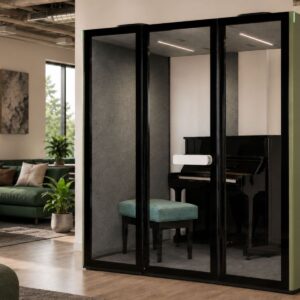
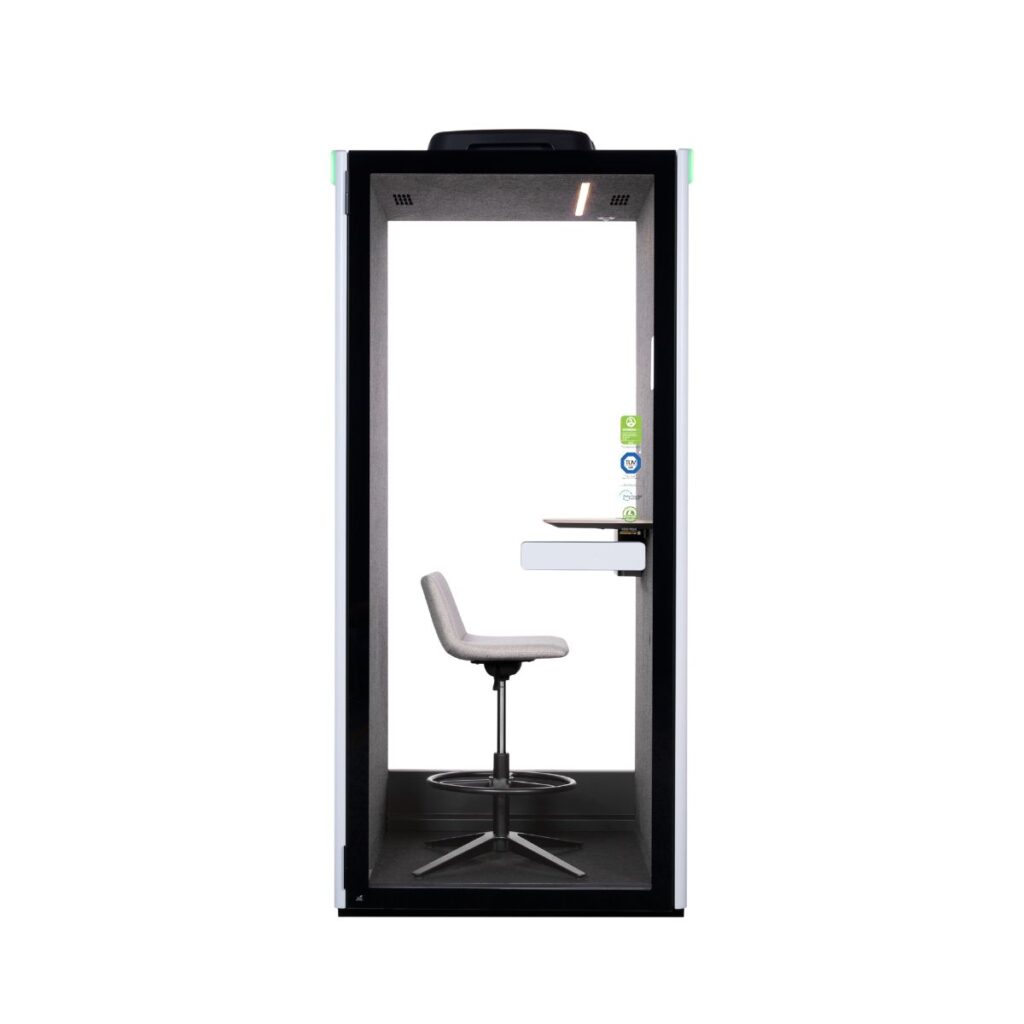
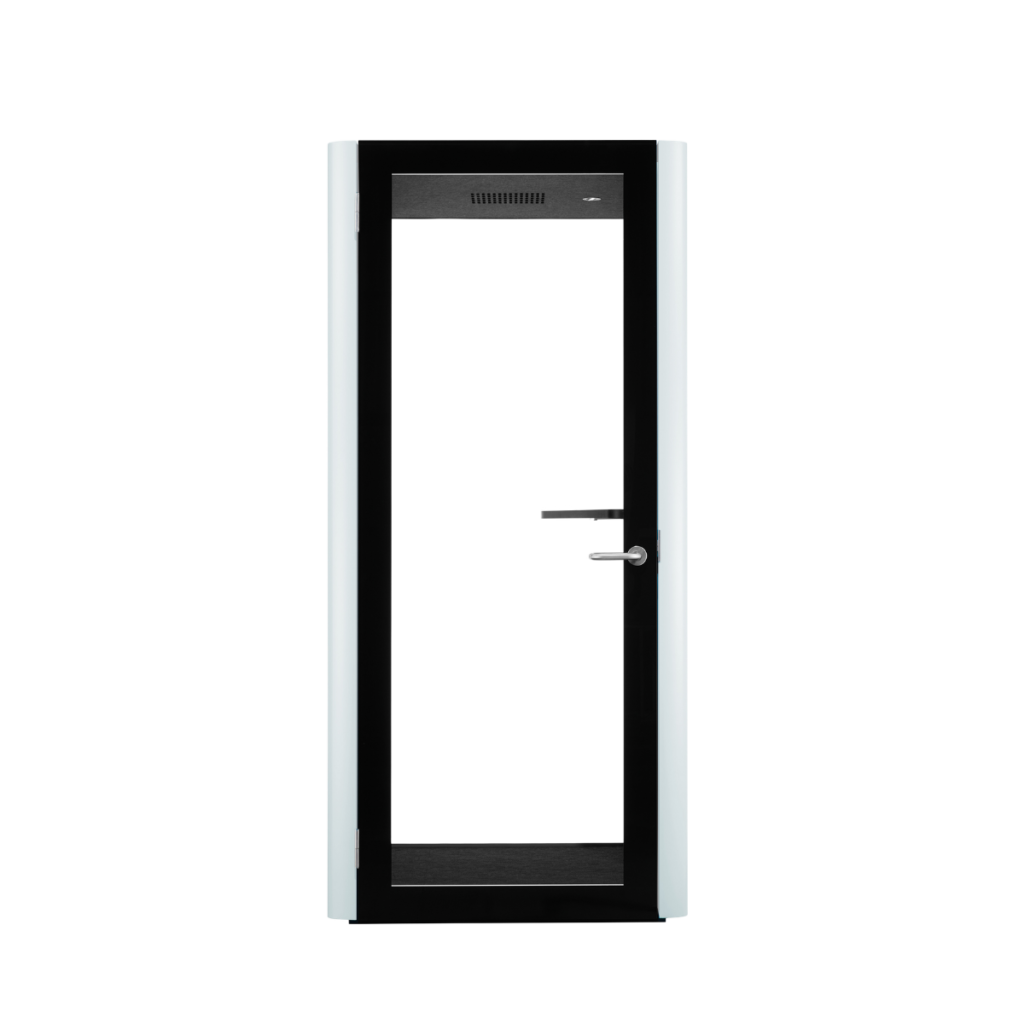
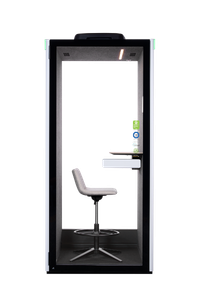
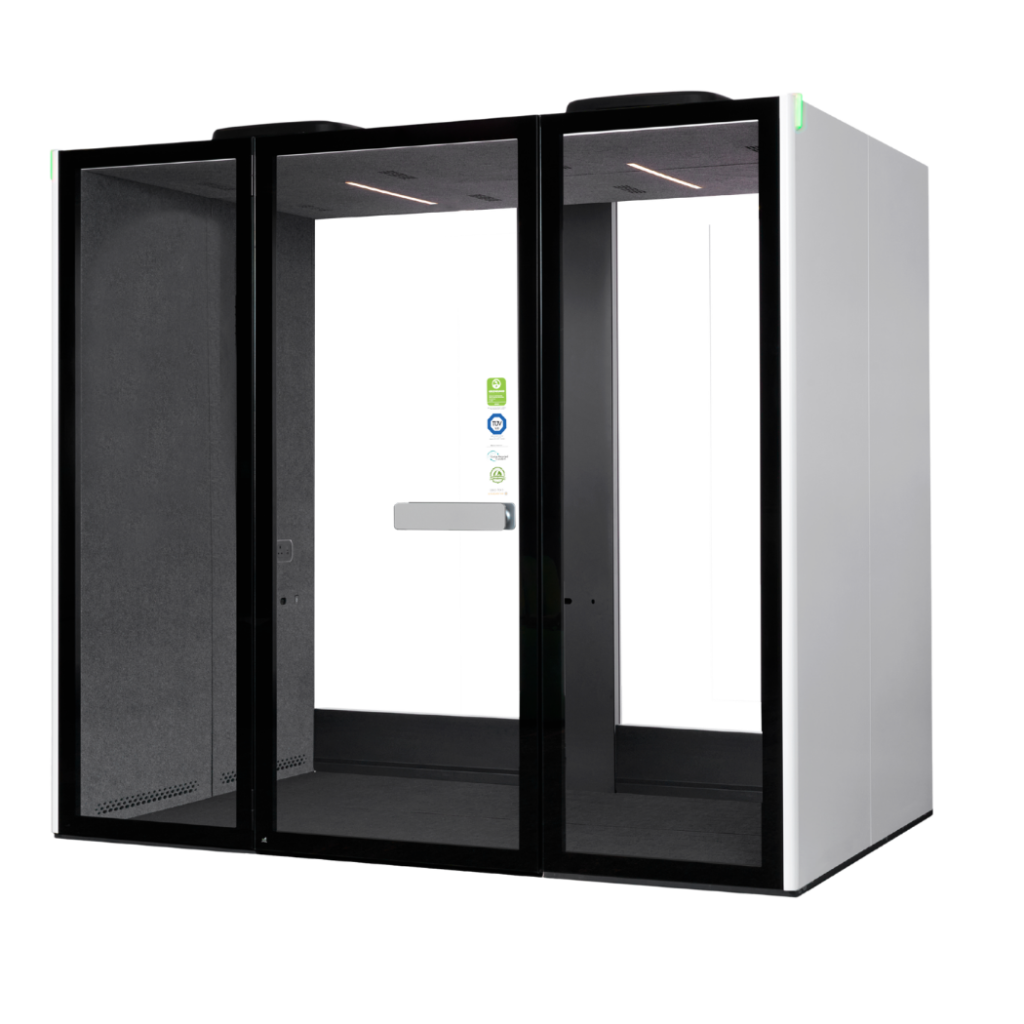
An office phone booth is a compact enclosed workspace designed primarily for phone calls, video conferences and short private conversations.
Unlike traditional meeting rooms, office phone booths typically accommodate one person and occupy a relatively small footprint.
Common features include:
- Acoustic wall and ceiling construction
- Integrated ventilation
- Lighting suitable for calls and work
- Power outlets or charging connections
- A compact work surface
- Glass doors or panels
The main purpose of an office phone booth is to provide a more private environment for conversations without occupying a larger meeting room.
For example, an employee who needs to discuss confidential project details can use a phone booth instead of making the call at an open workstation.
However, not every phone booth is designed for extended working sessions.
Best for: Short calls, virtual meetings and individual conversations.
2. What Is a Focus Pod?
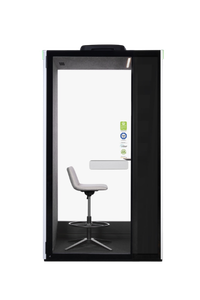
A focus pod is an enclosed workspace intended to support concentration and reduce surrounding distractions.
While a phone booth is often designed around speaking, a focus pod places greater emphasis on individual work.
Typical activities include:
- Writing reports
- Reviewing contracts
- Preparing presentations
- Coding or analytical work
- Reading and research
- Tasks requiring sustained concentration
A well-designed focus pod should consider seating comfort, desk dimensions, lighting and ventilation.
The objective isn’t to create complete silence. Instead, a focus pod provides greater separation from the surrounding office environment.
For employees who struggle to concentrate in busy open-plan workplaces, access to a dedicated focus space can be useful.
Best for: Individual concentration and tasks requiring fewer interruptions.
3. What Is a Working Pod?
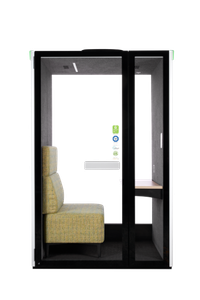
A working pod is an enclosed workspace designed for individual work.
The term is sometimes used interchangeably with focus pod or office pod, but it may suggest a space intended for longer work sessions.
Depending on the manufacturer, working pods may feature ergonomic seating, larger desks, integrated power connections and ventilation systems.
The important distinction is usability.
A compact standing phone booth might be comfortable for a ten-minute call but less appropriate for someone preparing a presentation over an extended period.
When comparing working pods, businesses should consider how employees will actually use them.
Best for: Individual work sessions, remote meetings and tasks requiring a dedicated enclosed workspace.
4. What Is a Privacy Pod?
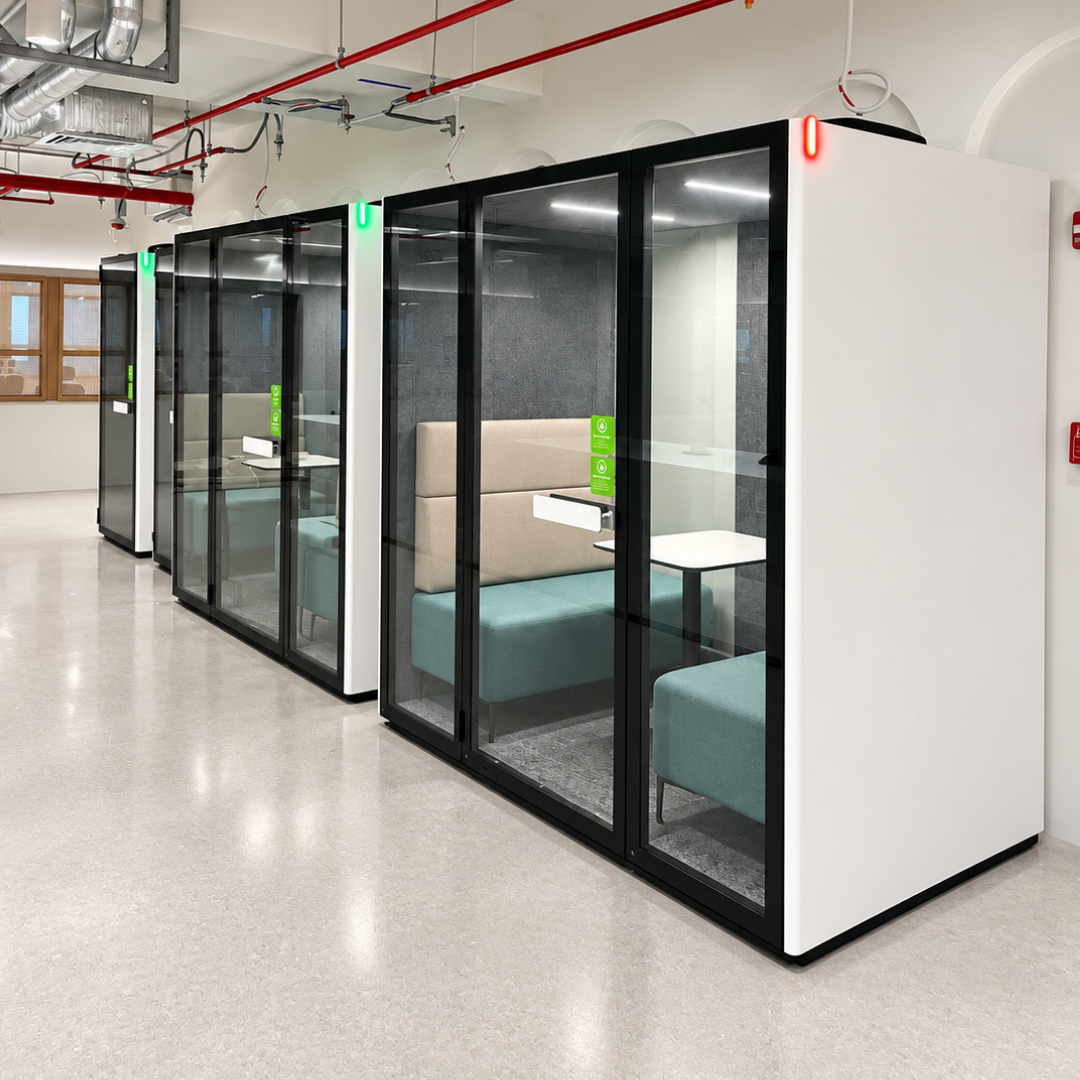
A privacy pod is a broader category of enclosed workspace designed to provide separation from the surrounding office.
Privacy can involve several elements:
Visual privacy: Limiting visibility into a workspace.
Speech privacy: Reducing the intelligibility of conversations outside an enclosure.
Distraction management: Creating separation from nearby movement and activity.
These benefits are related but not identical.
For example, frosted glass may improve visual privacy without necessarily improving acoustic performance.
Similarly, a pod may reduce speech transmission while still allowing some sound to be heard.
Understanding these distinctions helps businesses select the right type of privacy pod.
5. Phone Booth vs. Focus Pod vs. Working Pod
| Workspace | Primary Purpose | Typical Activity |
|---|---|---|
| Office phone booth | Private conversations | Phone and video calls |
| Focus pod | Individual concentration | Deep work and research |
| Working pod | Enclosed individual workspace | Computer-based tasks |
| Privacy pod | Greater personal separation | Calls or focused work |
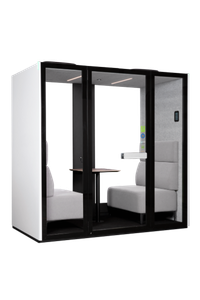
| Collaboration pod | Small-group interaction | Discussions and meetings |
These categories are not standardized. A single product may support several uses.
6. Does Acoustic Performance Matter?
Absolutely, particularly when speech privacy is important.
However, acoustic performance should be evaluated using meaningful technical information rather than broad marketing descriptions.
One relevant standard is ISO 23351-1, which provides a method for measuring speech level reduction in furniture ensembles and enclosures.
Speech level reduction describes how effectively an enclosure reduces speech transmitted to the surrounding environment under standardized conditions.
It does not mean that all sound is eliminated.
When comparing acoustic office pods, buyers should request model-specific acoustic test results.
They should also consider ventilation, lighting, ergonomics and overall construction quality.
7. How Many Office Phone Booths Does a Workplace Need?
There is no universal answer.
The appropriate number depends on factors such as:
- Employee headcount
- Frequency of virtual meetings
- Existing meeting room availability
- Office occupancy patterns
- Typical call duration
- Employee work preferences
A workplace with frequent client calls may require more phone booths than an office where employees primarily perform individual analytical tasks.
Before purchasing, businesses can review meeting room bookings, observe how employees use existing spaces and identify recurring privacy problems.
8. Why the Future Office Needs Different Types of Spaces
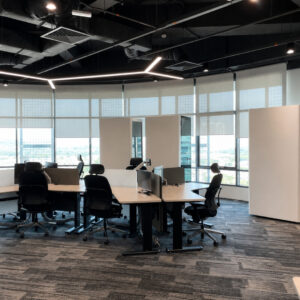
The traditional office often separated work into two categories: individual desks and meeting rooms.
Modern workplaces involve a wider range of activities.
Employees move between focused work, online meetings, informal collaboration and confidential discussions throughout the day.
Rather than expecting one environment to support every activity, organizations can provide a variety of work settings.
Office phone booths, focus pods, working pods and collaboration pods are all examples of this approach.
The objective is to give employees access to the right environment for the task at hand.
Frequently Asked Questions
Are office phone booths and focus pods the same?
Not necessarily. Phone booths generally prioritize calls and conversations, while focus pods emphasize individual concentration. Some products support both activities.
Can an office phone booth be used for long working sessions?
It depends on the booth’s design. Seating, ventilation, desk dimensions and ergonomics should be appropriate for the expected duration.
Are acoustic office pods completely silent?
No. Acoustic pods can reduce speech transmission and certain distractions, but they do not eliminate every sound.
What is the difference between a working pod and a meeting pod?
A working pod is generally intended for individual work, while a meeting pod accommodates discussions involving multiple people.
Are privacy pods suitable for open-plan offices?
They can be useful where employees need enclosed spaces for calls, concentration or confidential conversations.
Final Thoughts
The question isn’t whether an office phone booth, focus pod or working pod is universally better.
The question is which activities your workplace needs to support.
A well-planned office may combine open workstations, enclosed individual spaces, collaboration areas and conventional meeting rooms.
By understanding how employees actually work, businesses can create a more practical and adaptable workplace.