
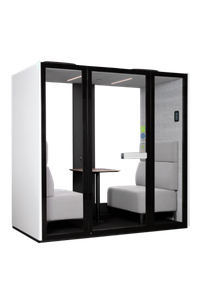
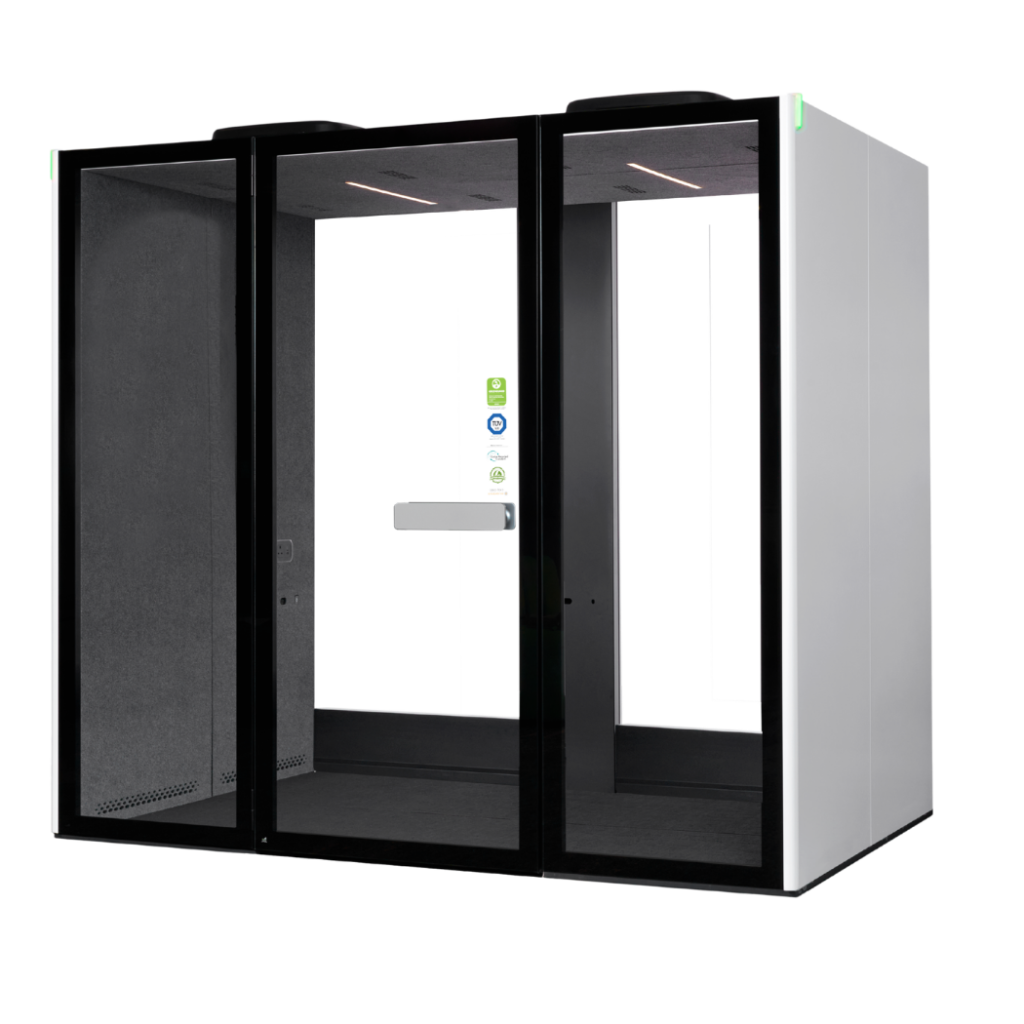
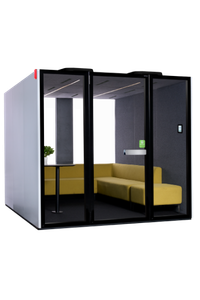
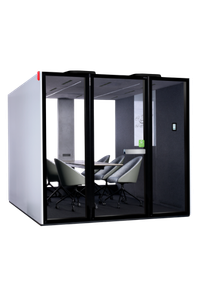
Institutions and businesses increasingly turn to acoustic pods to solve noise and privacy problems, but not every pod serves the same purpose. Two of the most common categories, the phone booth pod and the meeting pod, look similar at first glance yet solve different problems. Choosing the wrong one can mean wasted budget and a space that does not fit how people actually use it.
What Is an Office Phone Booth Pod?
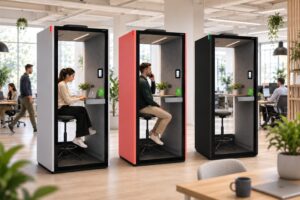
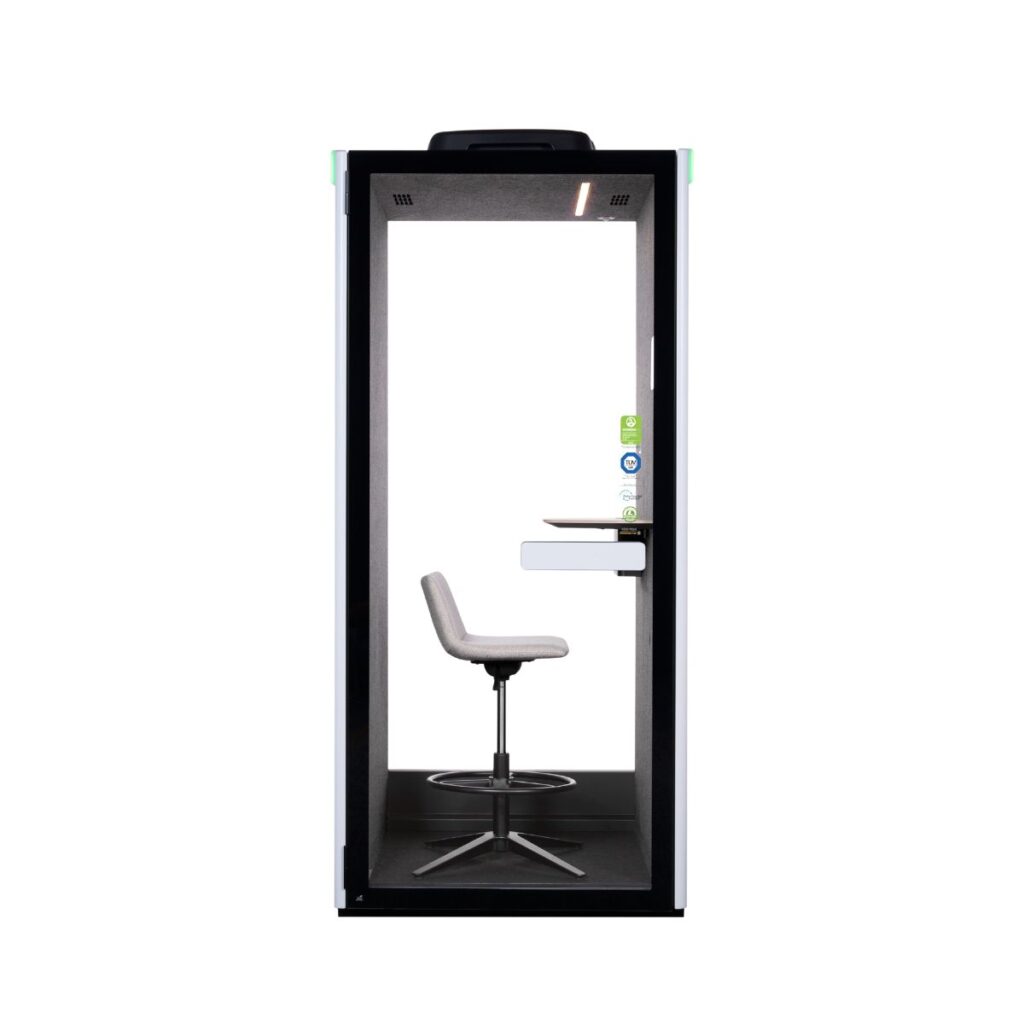
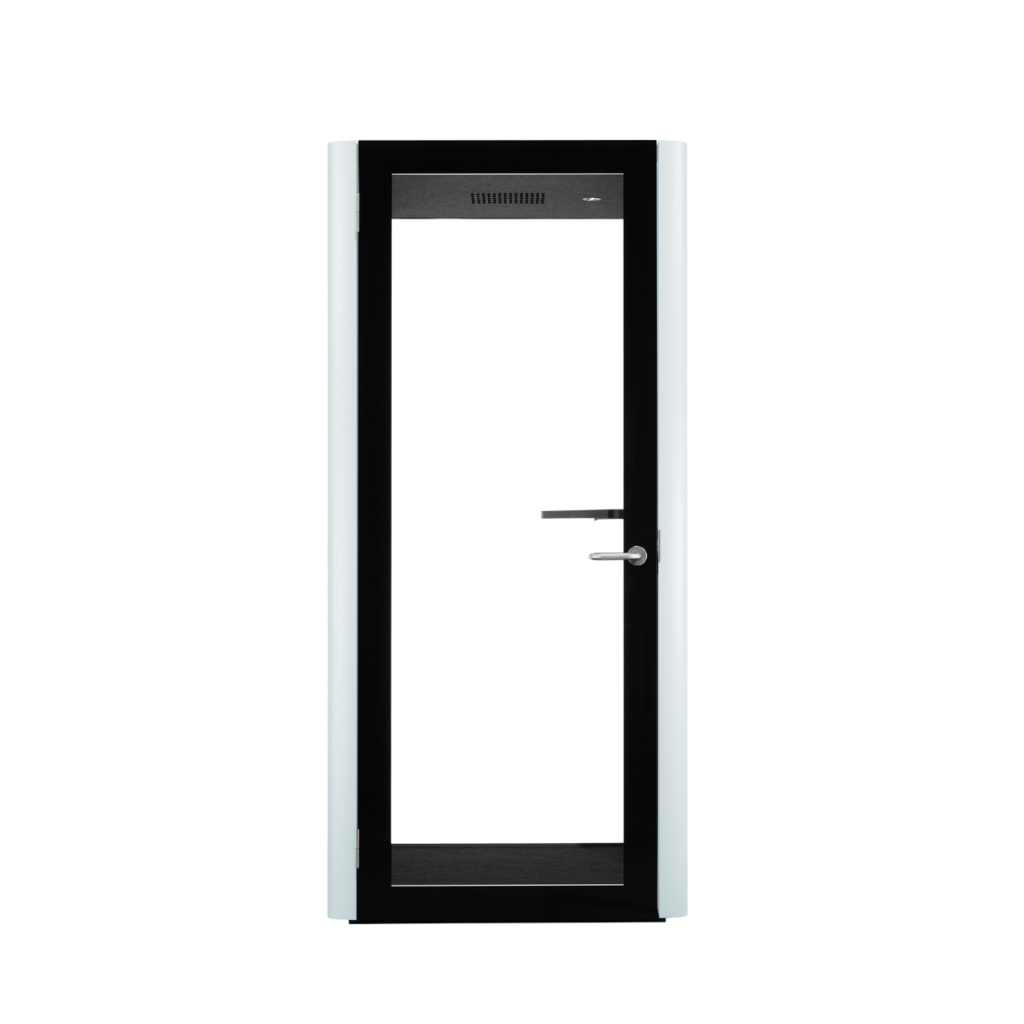
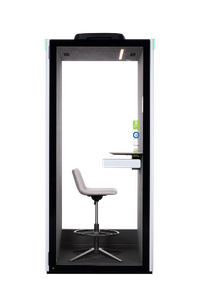
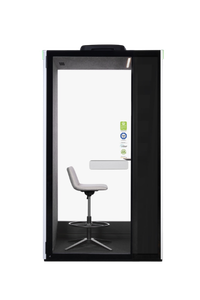
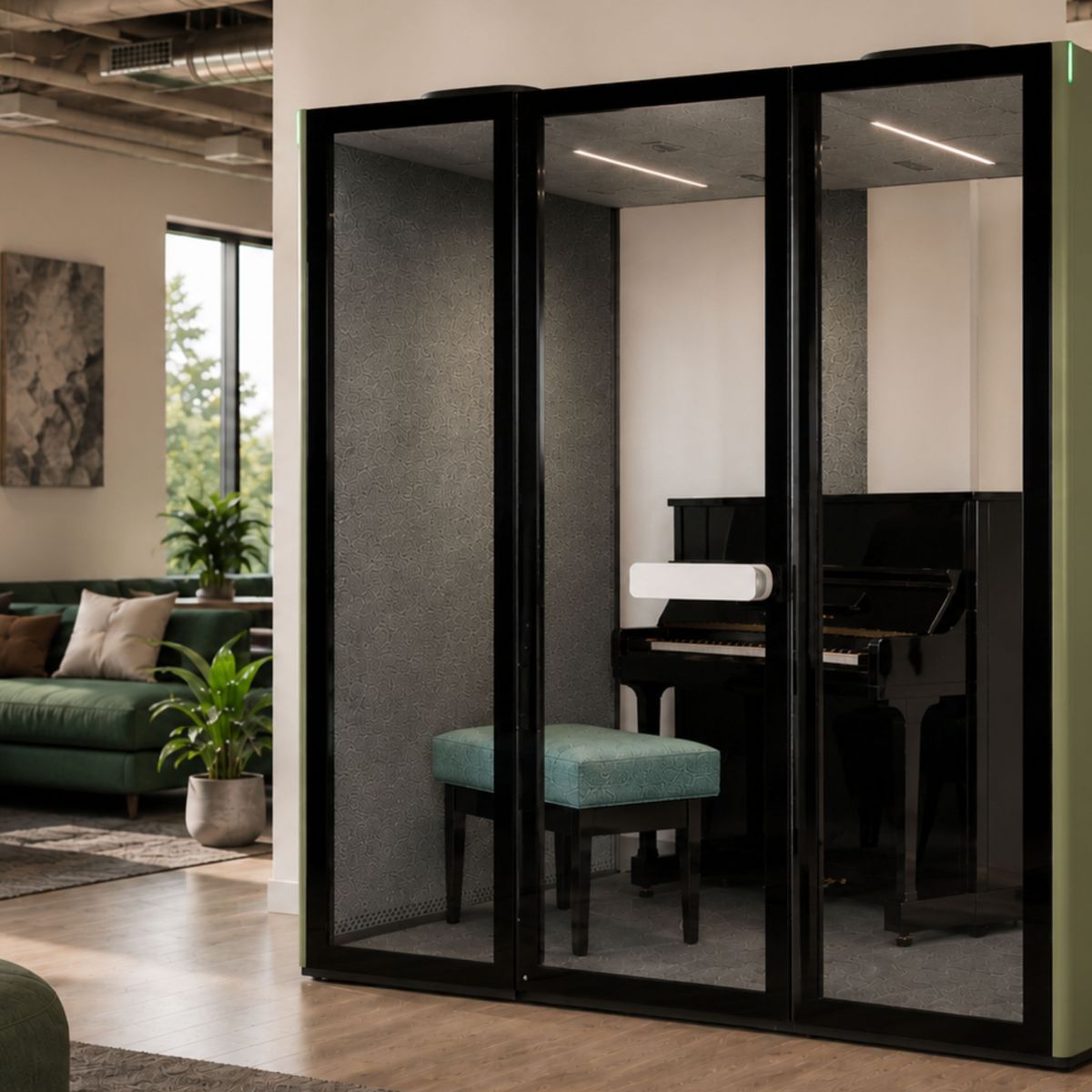
An office phone booth pod is a compact, single person acoustic space designed for short, focused tasks. Most models fit one person comfortably and sometimes two at most. Because of their small footprint, phone booths work well in tight areas such as corridors, open plan floors or library reading rooms.
People typically use phone booth pods for phone calls, video calls, quick focus work or a short private moment away from a busy room. Since sessions tend to be brief, these pods rarely include a full table setup. Instead, they focus on a stool or narrow shelf, strong ventilation and enough acoustic insulation to block a normal conversation from carrying into the surrounding space.
What Is a Meeting Pod?
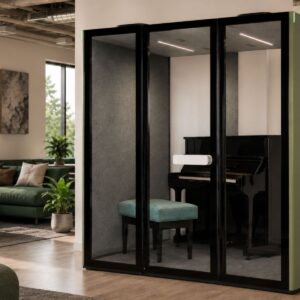
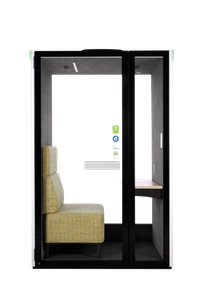
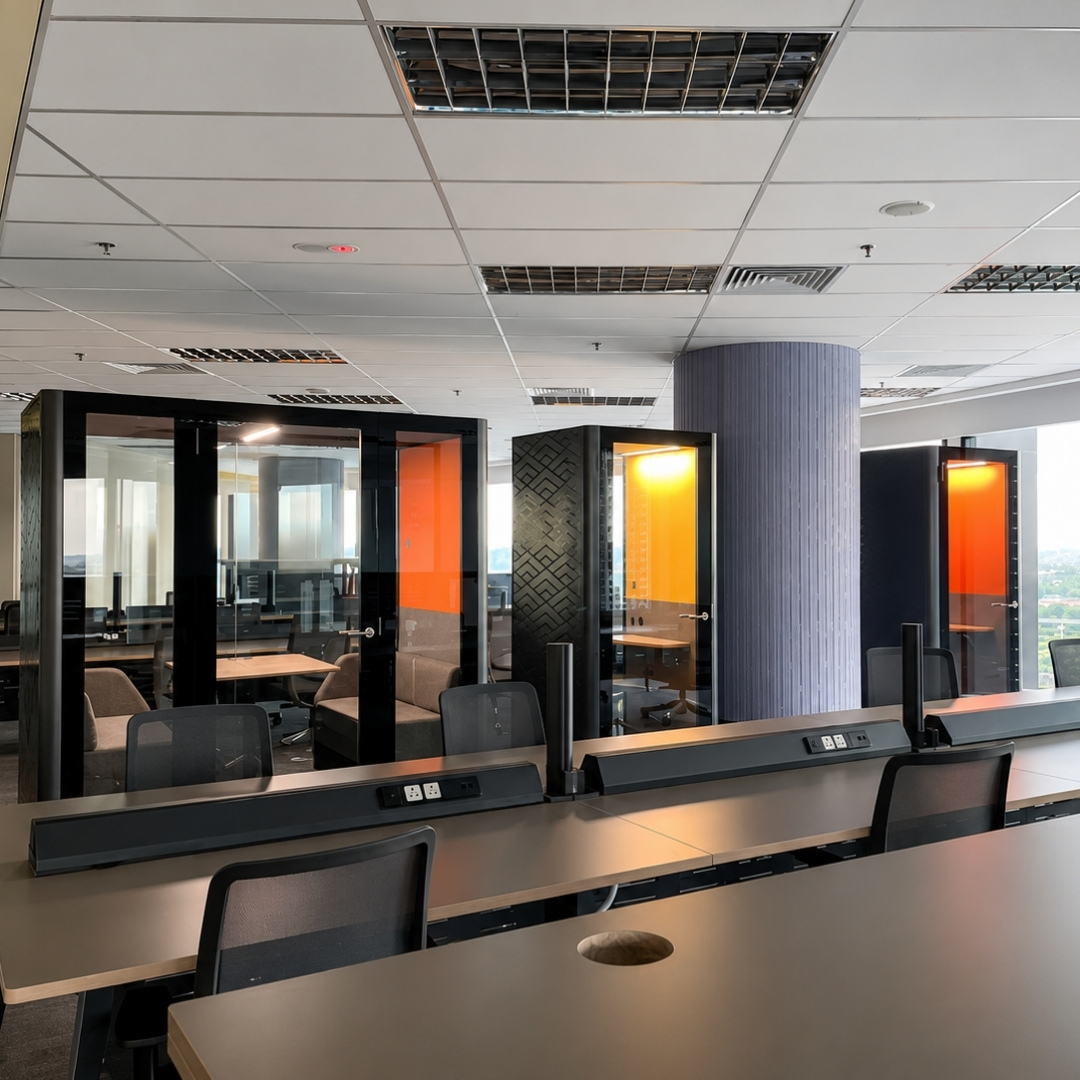
A meeting pod is a larger acoustic space built to host multiple people at once. Capacity usually ranges from two to six or more occupants, depending on the model. Unlike a phone booth, a meeting pod typically includes a table, several chairs and often a screen or whiteboard for collaborative work.
Institutions use meeting pods for small group discussions, interviews, tutoring sessions, client calls or any situation that needs more than one person in a private, contained space. Because sessions tend to run longer and involve more people talking at once, meeting pods generally need stronger ventilation and a higher noise reduction rating than a single person booth.
Key Differences at a Glance
Capacity. Phone booths suit one person, occasionally two. Meeting pods suit two to six or more, depending on the model chosen.
Footprint. Phone booths take up minimal floor space, which makes them easier to place in corridors or tight corners. Meeting pods need considerably more room, so floor planning matters more before purchase.
Furniture inside. Phone booths usually include a stool or standing shelf. Meeting pods include a table and multiple chairs, and sometimes a screen for presentations.
Typical use duration. People use phone booths for short sessions, often under thirty minutes. Meeting pods host longer sessions such as interviews, workshops or extended discussions.
Acoustic demands. Since more people speaking at once generates more sound, meeting pods generally require higher noise reduction performance than phone booths.
Cost. Phone booths typically cost less due to their smaller size and simpler interior. Meeting pods cost more, though the price reflects the added capacity and functionality.
Which One Should You Choose?
The right choice depends on how your space gets used day to day, not on which pod looks more impressive in a catalog.
Choose a phone booth pod if your team mainly needs quick privacy for calls, brief focus work or a moment away from a noisy floor, and floor space is limited.
Choose a meeting pod if your organization regularly needs private group discussions, interviews or collaborative sessions, and you have the floor space to support a larger unit.
Consider both if your building serves a mix of needs. Many schools, universities and offices install a combination, placing phone booths in high traffic corridors for quick calls while reserving meeting pods for departments that run frequent small group sessions.
Making the Decision Easier
Before purchasing either type, walk through your actual daily patterns rather than guessing. Count how many private calls happen in a typical week, note how often groups need a private space, and measure the floor area available in the locations under consideration. This kind of quick audit prevents the common mistake of buying a meeting pod that sits mostly empty, or a phone booth that constantly has people waiting outside because demand exceeds capacity.
For many institutions, the most efficient setup mixes both formats: phone booths distributed across high traffic zones for immediate individual use, and a smaller number of meeting pods placed near departments or teams that regularly need group privacy.
Final Thoughts
Office phone booths and meeting pods both solve the same underlying problem: a lack of private, controlled acoustic space in shared buildings. However, they solve it for different situations. Phone booths handle quick, individual needs in tight spaces, while meeting pods support longer, group focused sessions that need more room and stronger acoustic performance. Matching the pod to the actual use case, rather than defaulting to one format across the board, gets the most value out of the investment.
To learn more about Winpod and explore our acoustic workspace solutions, visit www.winpodacoustics.com.